
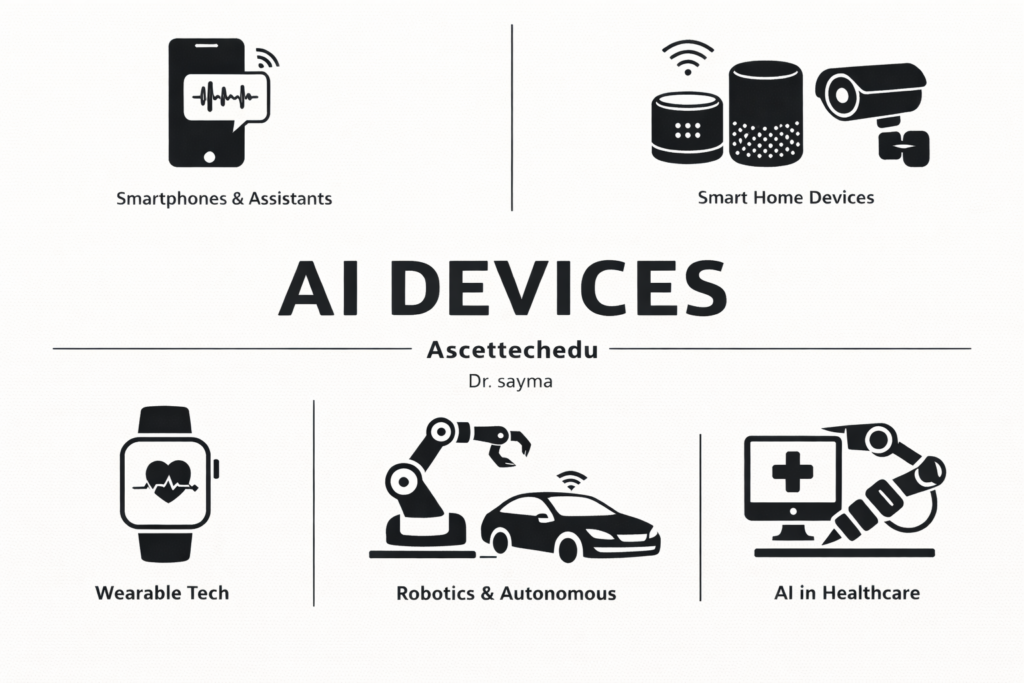
Artificial Intelligence (AI) is no longer confined to laboratories or science fiction—it has become a core part of our everyday lives. From smartphones that understand our voice commands to smart home appliances that anticipate our needs, AI devices are revolutionizing the way we interact with technology. These devices are not just tools; they are intelligent systems capable of learning, adapting, and improving over time. In this article, we explore the various AI devices available today, their applications, and the impact they are having globally.
What Are AI Devices?
AI devices are technological tools that utilize artificial intelligence algorithms to perform tasks that usually require human intelligence. These tasks can include speech recognition, decision-making, visual perception, language translation, and predictive analytics. Unlike traditional devices, AI devices are not static; they learn from data, adapt to user behavior, and improve their performance over time.
AI devices typically combine hardware (sensors, processors, cameras) with software (AI algorithms, neural networks) to perform intelligent functions. For instance, a smart thermostat uses temperature sensors and AI algorithms to predict the optimal room temperature based on user habits.
Categories of AI Devices
AI devices can be categorized based on their application, form factor, and intelligence level.
1. Smartphones and Personal Assistants
Modern smartphones are some of the most popular AI devices. They are equipped with AI-powered features like virtual assistants (e.g., Siri, Google Assistant, Alexa), facial recognition, and predictive text. AI allows these devices to understand user preferences, automate tasks, and offer personalized recommendations.
Personal assistants have evolved into AI companions capable of scheduling appointments, sending reminders, and even controlling other smart devices. For example, Google Assistant can integrate with smart home devices to turn on lights, adjust thermostats, or play music with voice commands.
2. Smart Home Devices
Smart home devices are transforming the way we live by adding convenience, security, and energy efficiency. AI-powered devices in this category include:
- Smart speakers: Devices like Amazon Echo use AI to process voice commands and control other connected devices.
- Smart thermostats: Nest and Ecobee learn user routines to optimize energy usage while maintaining comfort.
- AI-powered cameras and security systems: Ring and Arlo use computer vision to detect unusual activity and alert homeowners in real time.
These devices enhance everyday living while providing seamless integration with other AI systems.
3. Wearable AI Devices
Wearables are another rapidly growing segment of AI devices. These devices, such as smartwatches and fitness trackers, monitor user activity and health metrics using AI.
- Fitness and health tracking: Devices like Apple Watch and Fitbit track heart rate, sleep patterns, and daily activity. AI algorithms analyze this data to provide personalized insights and health recommendations.
- Medical wearables: Advanced AI wearables can detect early symptoms of chronic diseases, predict potential health risks, and notify healthcare providers.
Wearables demonstrate the ability of AI devices to not only enhance lifestyle but also contribute to health and well-being.
4. Robotics and Autonomous Machines
AI has been instrumental in the development of intelligent robots and autonomous machines. These devices are used in various industries such as manufacturing, healthcare, logistics, and defense.
- Industrial robots: AI-powered robots in factories can perform complex assembly tasks, detect defects, and optimize production lines.
- Service robots: Hospitals and hotels are increasingly using AI robots to assist patients, deliver goods, and provide information.
- Autonomous vehicles: Self-driving cars by Tesla, Waymo, and other companies use AI to analyze sensor data, make decisions, and navigate safely.
Robotics demonstrates AI’s potential to reduce human labor, improve efficiency, and enhance safety in challenging environments.
5. AI Devices in Healthcare
AI devices are transforming healthcare by improving diagnostics, treatment, and patient care. Examples include:
- AI diagnostic tools: Devices that use AI algorithms to analyze medical images (X-rays, MRIs, CT scans) and detect abnormalities like tumors or fractures.
- Remote monitoring devices: AI-enabled devices can track patient vitals and alert medical staff to irregularities.
- Surgical robots: Robots like the da Vinci Surgical System assist surgeons in performing precise, minimally invasive procedures.
AI devices in healthcare reduce human error, enhance treatment accuracy, and improve overall patient outcomes.
6. AI in Education Devices
AI devices are increasingly being integrated into education to enhance learning experiences. Examples include:
- AI-powered learning apps: Tools that provide personalized learning plans, assessments, and feedback based on student performance.
- Virtual tutors and chatbots: AI devices that assist students with homework, answer questions, and provide additional guidance.
- Smart classroom devices: AI-enabled interactive whiteboards and learning platforms that adapt content based on student engagement.
These devices create more interactive, efficient, and customized learning environments.
How AI Devices Work
AI devices rely on a combination of machine learning, deep learning, and natural language processing to function. The process generally involves:
- Data Collection: Sensors and input devices gather data from the environment or user.
- Data Processing: The device uses AI algorithms to analyze and interpret the data.
- Decision-Making: Based on the analysis, the AI device decides the best action.
- Learning and Improvement: The device continually learns from new data to improve future performance.
For instance, a smart vacuum cleaner like Roomba uses sensors to map a room, AI algorithms to determine the cleaning path, and machine learning to improve efficiency over time.
Advantages of AI Devices
AI devices offer numerous benefits across multiple domains:
- Efficiency: Automating repetitive tasks saves time and reduces human error.
- Personalization: AI devices adapt to individual preferences for a more tailored experience.
- Predictive Capabilities: Devices can forecast outcomes and prevent problems before they occur.
- Enhanced Safety: AI-powered surveillance, autonomous vehicles, and medical devices improve safety and security.
- Accessibility: AI devices help differently-abled individuals interact with technology more easily, such as speech-to-text devices.
Challenges and Ethical Considerations
Despite their benefits, AI devices also present challenges:
- Privacy concerns: AI devices collect vast amounts of personal data, raising security and privacy issues.
- Job displacement: Automation of tasks by AI devices may impact employment in certain sectors.
- Bias and fairness: AI algorithms can inherit biases from data, leading to unfair decisions.
- Dependency: Over-reliance on AI devices can reduce human skills and decision-making ability.
Ethical design, transparency, and responsible usage are essential to mitigate these risks.
The Future of AI Devices
The future of AI devices is exciting and expansive. With advancements in AI, devices will become more autonomous, intelligent, and seamlessly integrated into daily life. Emerging trends include:
- Edge AI devices: AI processing on devices themselves without relying on cloud computing, ensuring faster and more secure performance.
- AI-powered IoT ecosystems: Smart cities and connected homes where AI devices communicate with each other for optimal efficiency.
- AI in personalized medicine: Devices capable of predicting diseases and recommending individualized treatments.
- Human-AI collaboration: Devices will increasingly work alongside humans to enhance capabilities rather than replace them.
As AI technology evolves, the boundary between humans and machines will continue to blur, creating smarter, more adaptive environments.
Conclusion
AI devices are no longer futuristic—they are part of our daily reality. From smartphones and smart homes to healthcare and education, AI devices are transforming how we live, work, and interact with the world. While there are challenges to address, the potential benefits of AI devices are enormous, promising a future that is more efficient, personalized, and intelligent.
For businesses, consumers, and society as a whole, understanding and embracing AI devices will be critical in the years to come.