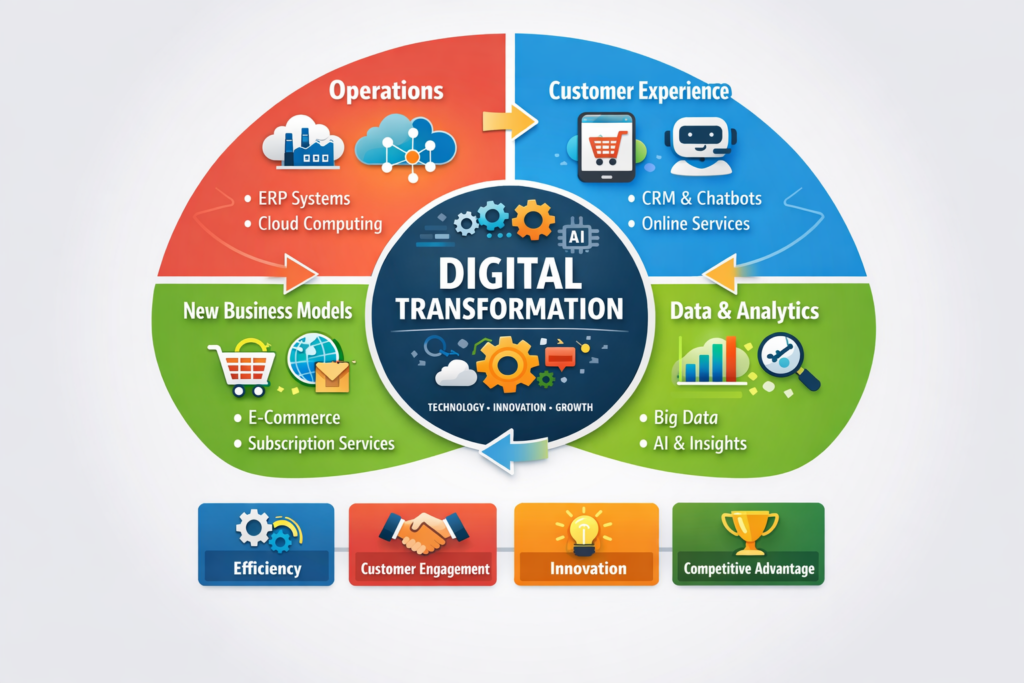

Digital transformation involves integrating digital tools into all areas of a business, resulting in:
- Improved efficiency: Automating manual processes, reducing errors, and speeding up operations.
- Enhanced customer experience: Personalized services, faster response times, and online interactions.
- Data-driven decision making: Using analytics and AI to guide strategy and operations.
- New business models: For example, traditional retailers adopting e-commerce or subscription services.
2. Key Areas Impacted by Digital Transformation
- Operations:
- ERP (Enterprise Resource Planning) systems streamline supply chain, finance, and HR.
- Cloud computing allows flexible, scalable infrastructure.
- Customer Engagement:
- CRM (Customer Relationship Management) systems track and personalize interactions.
- Social media, apps, and chatbots improve communication.
- Products & Services:
- Digital products (apps, online platforms) complement traditional offerings.
- IoT (Internet of Things) devices can create smart products.
- Decision Making:
- Big Data and analytics provide insights for strategy.
- AI and machine learning predict trends and customer behavior.
3. Benefits of Digital Transformation
- Competitive advantage: Faster, smarter, and more agile than competitors.
- Cost savings: Less reliance on manual labor, reduced downtime, optimized resources.
- Customer loyalty: Better experience leads to higher retention.
- Innovation opportunities: Easier to experiment with new products or services.
4. Challenges
- Resistance to change from employees or management.
- High initial investment in technology and training.
- Cybersecurity risks with increased digital presence.
- Ensuring alignment between technology and business goals.
5. Examples
- Retail: Amazon uses AI for recommendations, automated warehouses, and cloud services.
- Banking: Banks offer mobile banking, AI chatbots, and digital wallets.
- Education: Online learning platforms, AI-based assessments, and virtual classrooms.
In short, digital transformation is not just about going online—it’s about reimagining the business using technology to create more value for customers and stakeholders.
If you want, I can make a simple diagram showing digital transformation in business—it will clearly show how tech affects operations, customers, and growth.