
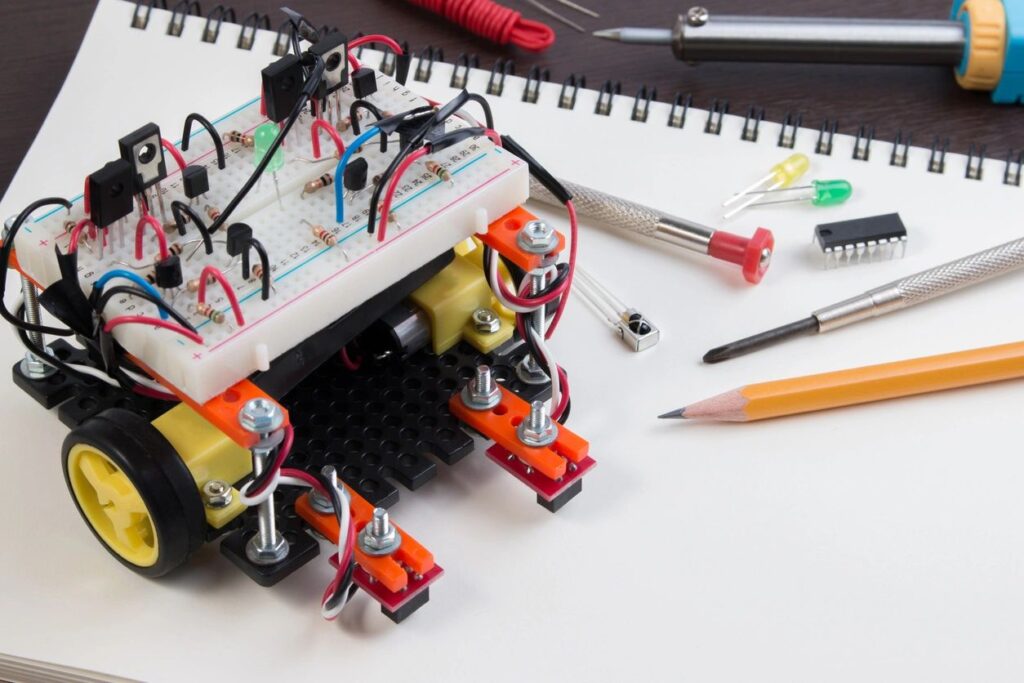
The robotics industry is one of the fastest‑growing tech sectors globally. Robots are transforming industries like manufacturing automation, logistics, healthcare, consumer electronics, humanoid robotics, and AI‑driven machines. Today’s leading robot making companies range from traditional industrial robot manufacturers to cutting‑edge humanoid and service robot innovators. This guide covers the most influential players shaping the future of robotic technology.
What Are Robotics Companies?
Robotics companies design, develop, and manufacture robots — machines that can perform tasks autonomously or with human guidance. These range from industrial robots on factory floors to humanoid robots that mimic human motion, and service robots used in homes, healthcare, and logistics.
Key SEO terms: robotics companies, robot manufacturers, industrial robots, humanoid robot makers.
Top Industrial Robot Makers
Industrial robots are designed for high‑speed, high‑precision tasks in sectors like automotive, electronics, and warehousing. These companies produce robotic arms, welding robots, and automated systems for factories.
FANUC Corporation
FANUC (Fuji Automatic Numerical Control) from Japan is often cited as one of the largest industrial robot manufacturers in the world, known for its reliable automated systems used globally. It has decades of expertise in CNC controllers integrated with robotic arms and automation solutions.
Yaskawa Electric Corporation
Yaskawa Electric Corporation is another major Japanese robotics and automation company. Its Motoman seriesindustrial robots handle welding, palletizing, and general automated tasks for factories worldwide.
ABB Robotics
Swiss‑based ABB Robotics is a heavyweight in industrial automation and robotics. Its portfolio includes collaborative robots (cobots), mobile robots, and high‑speed robotic arms for manufacturing lines. The company announced a spin‑off of its robotics division to further expand its market focus.
KUKA AG
Germany’s KUKA Robotics specializes in robotic systems for automotive and aerospace supply chains. Its industrial robots are known for durability, flexibility, and integration with AI‑driven automation.
Epson Robots
Epson is a key player in precision automation, offering compact robots for electronics assembly and small‑part tasks. It competes with other Japanese heavyweights like FANUC and Yaskawa for industrial market share.
Leading Collaborative Robot (Cobot) Companies
Collaborative robots (or cobots) are designed to work safely alongside humans in factories, labs, and offices. These robots emphasize ease of programming and flexible deployment.
Universal Robots
Universal Robots from Denmark pioneered collaborative robots that can operate alongside human workers without protective cages. It remains a market leader in cobots globally.
Doosan Robotics
South Korea’s Doosan Robotics designs cobots and service robots, ranking among the top global cobot makers. Its robots assist in packaging, food service, and logistics automation.
Other Notable Cobot Makers
- Denso Corporation: Japanese firm producing COBOTTA and other collaborative models.
- F&P Robotics AG: Swiss company focusing on service and healthcare cobots.
- Precise Automation and Rethink Robotics: Smaller innovators in niche cobot applications.
Robotics Companies in Consumer and Service Robots
Consumer and service robots include products for homes, cleaning, entertainment, and human interaction.
Picea Robotics (Owner of Roomba)
Shenzhen Picea Robotics has become a major ODM (original design manufacturer) for smart home robots like robotic vacuum cleaners and mops. It also acquired iRobot’s Roomba brand, marking a shift in the global consumer robotics market.
UBtech Robotics
UBtech Robotics from China focuses on humanoid and service robots, producing models for entertainment, education, and commercial use. It recently launched new industrial and logistics robot platforms.
iRobot (Legacy Brand)
iRobot Corporation popularized consumer robots like the Roomba and Braava. While its future is evolving under new ownership, its influence on home robots remains significant.
Cutting‑Edge Humanoid and AI‑Driven Robot Makers
Humanoid robots aim to replicate human motion and behavior, often integrating advanced AI.
Boston Dynamics
Boston Dynamics is famous for dynamic robots like Spot, Atlas, and Stretch that push boundaries in mobility, balance, and real‑world task performance. The company recently announced a leadership change as it continues expanding its enterprise robotics divisions.
Tesla Robotics
Tesla’s Optimus robot project reflects the company’s ambition to transition from automotive tech to humanoid robots powered by advanced AI and neural networks. Market buzz has increased around Tesla’s robotics strategy beyond EVs.
AgiBot
AgiBot from China is an emerging humanoid robot maker that has begun mass production of robots designed for industrial and service sectors, showcasing real‑world deployment and record‑setting capabilities.
Apptronik
Apptronik is a startup innovator building humanoid robotics, like the Apollo platform, combining mobility with potential applications in manufacturing, logistics, and care. It recently raised significant funding to scale production.
Robotics in Healthcare and Specialized Fields
Robotics makers in healthcare and specialized sectors combine precision engineering with mission‑critical applications.
Surgical Robotics – Intuitive Surgical
Intuitive Surgical’s Da Vinci System dominates the robotic surgery segment, helping surgeons perform complex procedures with robotic precision and enhanced visualization. Robotic surgery is a major growth area in healthcare robotics.
Agricultural and Autonomous Robots
Companies like Blue River Technology develop robotics for precision agriculture, while others innovate in autonomous ground vehicles and research platforms.
Emerging Robotics Hubs and Market Trends
The global robotics industry is evolving rapidly — with Asia leading installation and innovation. According to industry data, the majority of newly deployed robots are in Asia, driven by demand in manufacturing and automation expansion.
China, in particular, is investing heavily in humanoid and industrial robots, creating ecosystems like “Robot Valleys” and supporting hundreds of robotic startups.
How Robotics Companies Are Shaping the Future
Impact on Industries
- Manufacturing: Robotics automate repetitive tasks, increase productivity, and integrate with digital systems.
- Healthcare: Surgical robots enhance precision and recovery outcomes.
- Logistics: Automated mobile robots streamline warehouse operations.
- Home Automation: Consumer robots like vacuum cleaners, mops, and personal assistants improve everyday life.
Job Creation and Innovation
Although automation increases productivity, it also drives demand for new skills in robot programming, AI, maintenance, and system integration — expanding careers in engineering and robotics research.
Conclusion
The world’s top robot making companies span traditional industrial players like FANUC, Yaskawa, and ABB, to collaborative robot leaders like Universal Robots and Doosan, and into cutting‑edge humanoid innovators such as Boston Dynamics, Tesla Robotics, AgiBot, and Apptronik. With a boom in automation, AI, and robotics R&D, these companies are not just shaping factories — they’re transforming how humans interact with machines across industries and daily life.
These robot manufacturers represent the future of intelligent automation, redefining efficiency, precision, and productivity worldwide.